Friday, July 25, 2014

Home Search Criteria - point2homes


Website:
http://www.point2homes.com/CA/Real-Estate-Listings/BC/Vancouver-Island.html


Home Search Criteria:
  • $500 to 600 thousand dollars
  • Single family home property
  • 0.3 acre (1200 sqm, 12,000 sqft) minimum lot size
  • 4 bedrooms, 3 bathrooms minimum
  • Less than 1 hour drive from Victoria, BC
  • Less than 60 km from Victoria, BC


Locations, Driving Distance and Time:

C
Central Saanich
Cherry Point -- 50 km, 43 min
Cobble Hill -- 48 km, 41 min
Colwood
Cowichan Bay -- 54 km, 46 min

D
Duncan -- 60 km, 50 min

E
Esquimalt

H
Highlands

L
Langford

M
Malahat
Metchosin
Mill Bay -- 42 km, 37 min

N
North Cowichan -- 69 km, 59 min
North Saanich

O
Oak Bay

S
Saanich
Shawnigan Lake -- 44 km, 43 min
Sidney
Sooke -- 39 km, 42 min

V
Victoria
View Royal


Friday, January 3, 2014

How to Add Value to Laundry Card


1. Insert Laundry card in the machine

2. Look at the options:
   a.  F1 = $10
   b.  F2 = $25
   c.  F3 = Other

3. Select Other
    Note:
    a. The maximum value in the Laundry card after the addition is $99
    b. Example: If your current balance in the Laundry card is $7, you can add up to $92

4. Enter the amount you want to add, but not exceeding the limit of $99 total (after the added amount)

5. Select Debit

6. Swipe your Bank card

7. Choose CHK

8. Enter you PIN

9. Press OK

10. Select YES to get Printed Receipt

11. The display will say DIALING...CONNECTED, DO NOT REMOVE CARD

12. When you see APPROVED, remove your Laundry card

13. Get the receipt

14. Check the receipt for correct amounts and keep it for your records in case of discrepancies.

Note:
This procedure is based on a Phelps Laundry Machine


Tuesday, July 16, 2013

Main Electrical Panel Circuit Breaker (2 bedroom)


Note:
The data below is for a 2-bedroom apartment. It serves as a reference point. For a 4-bedroom house, estimate can be made based on the values of this reference point.


Main Electrical Panel specifications:
125 AMPS max
24 CIRCUITS max
120/240 VAC
1 PHASE
2 POLE CIRCUIT BREAKER


Left of Panel:
60 A
60 A
15 A --- Dining
15 A --- Kitchen countertop plug
15 A --- Living Room, Lights & Plugs
15 A --- Bedroom1 plugs
15 A --- Bedroom2 plugs

Right of Panel:
15 A --- Hallway lights
15 A --- Fridge
40 A --- Range (Electric Stove)
40 A --- Range (Electric Stove), #8 AWG copper wire

Monday, July 15, 2013

How to compute your monthly Power Consumption (Electric Bill)


The following computation is based on a 2-bedroom apartment with typical home appliances. The total cost does not include heating costs, air-conditioning costs and other relevant costs. The total monthly hours of usage are approximate values of daily usage multiplied by 30. This power computation (wattage) is only based on the home appliances listed here. The purpose of this article is to show a basic and simple way to calculate for your monthly electric bill.

The cost of power is based on:

a] 120V/240V, 60 Hz
b] Basic charge ---> 15 cents/day
c] KW-hr cost ----> 5 cents/kw-hr  
d] Taxes ---> 7%

e] Power Formula:

    Power = Volts x Amps


Power Computation example:

given:
120 volts
10 amperes

Power = voltage x current
Power = volts x amps
Power = 120 x 10
Power = 1200 watts
Power = 1.2 Kilowatts (KW)


Power consumption of home appliances:


1. Electric Stove (Range, Oven)
- 12,000 watts
- 240V, 60 Hz, #8 AWG (typical code minimum #10 AWG copper wire), Circuit Breaker 40 AMPS


2. Rice cooker
- 400 watts


3. Microwave
- 1350 watts


4. Bread toaster
- 1500 watts


5. Kettle
- 1500 watts


6. Refrigerator (fridge)
- 600 watts
- 20 cu. ft (cubic feet) capacity


7. TV
- 180 watts
- 120 V, 1.5 A
- 120 x 1.5 = 180


8. Radio
- 50 watts


9. Electric fan
- 60 watts
- 120 Volts  x  0.5 Amperes


10. Vacuum cleaner
- 360 watts
- 120V x 3A = 360 wattage


11. Iron
- 1200 watts
- 120 voltage x 10 amperage = 1200 wattage


12. Lighting
- 900 watts
- based on 15 light bulbs x 60 watts/light bulb
- 15 x 60 = 900


13. Laptop computer
- 65 watts


14. Printer-inkjet    
- 75 watts     


Monthly Energy Consumption of Home Appliances & Equipment:

------------------------------------------------------------------------------------ 

.

Energy Usage (Kilowatt-hour) ----- Appliance/Equipment

12 KW x 200 hrs = 2400 KW-hr ----- Electric Stove (Range, Oven)

1.5 KW x 5 hrs = 7.5 KW-hr ----- Bread toaster

1.5 KW x 5 hrs = 7.5 KW-hr ----- Kettle

1.35 KW x 5 hrs = 6.75 KW-hr ----- Microwave

1.2 KW x 5 hrs = 6 KW-hr ----- Iron

0.900 KW x 250 hrs = 225 KW-hr ----- Lighting

0.600 KW x 720 hrs = 432 KW-hr ----- Refrigerator (fridge)

0.400 KW x 30 hrs = 12 KW-hr ----- Rice cooker

0.360 KW x 2 hrs = 0.72 KW-hr ----- Vacuum cleaner

0.180 KW x 300 hrs = 54 KW-hr ----- TV

0.075 KW x 1 hour = 0.075 KW-hr ----- Printer-inkjet    

0.065 KW x 100 hrs = 6.5 KW-hr ----- Laptop computer

0.060 KW x 50 hours = 3 KW-hr ----- Electric fan

0.050 KW x 10 hours = 0.5 KW-hr ----- Radio

-----------------------------------------------------------------------------
Total Monthly Energy Usage = 3162 KW-hrs


Using the given data:

KW-hr cost = 5 cents/kw-hr  
Basic charge = 15 cents/day
Taxes = 7%


Total Monthly Electric Bill

= (Total Monthly Energy Usage x KW-hr cost) + Basic charge + Taxes
= (3162 KW-hr x $0.05/KW-hr) + ($0.15 x 30) + Taxes
= 158 + 4.5 + Taxes
= $162.50 + (0.07 x $162.50)
= $174    

Saturday, December 15, 2012

How to replace broken or damaged toilet seat and mount the new one


Broken or damaged toilet seats happen generally because of too much pressure, too much weight on the top of the toilet seat. Another possible reason is repeated "dropping" of the toilet seat as a result of not holding the seat while putting it down.

Below is a simple step by step procedure on how to replace your damaged or broken toilet seat and how to mount the new one.


Step by Step Procedure of replacing broken/damaged toilet seat:


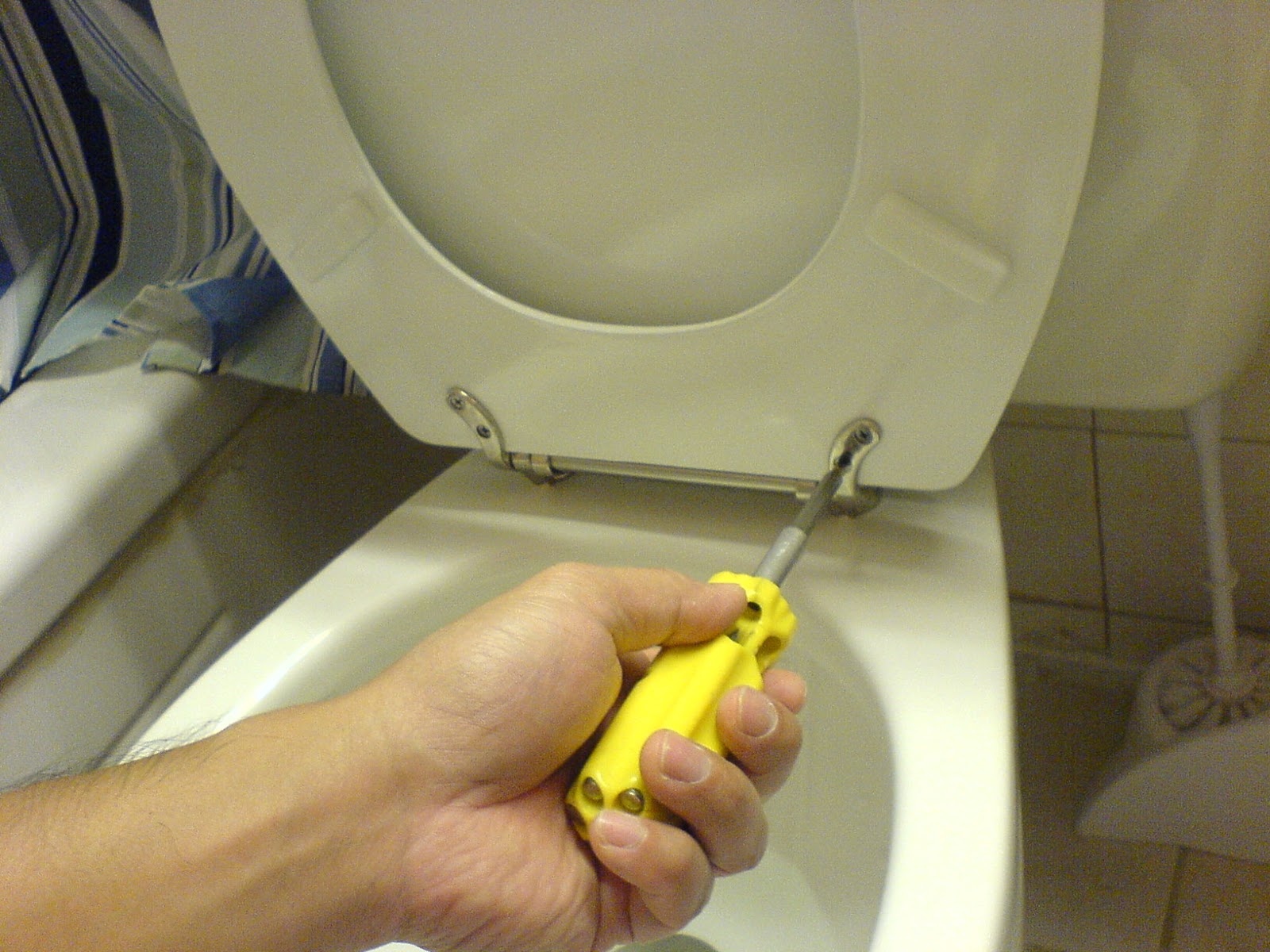
1. Close the toilet cover. Open or remove the cover caps. In some models, there is no covering caps and you see the screw head right away.

2. Hold the bottom nut using a wrench or pliers then loosen the top screw using a Phillips (star) or flat screw driver depending on the screw head. If it is hard to loosen the nuts, you can spray some oil on the nuts, leave it for few minutes to penetrate and break the rust or dirt.

3. After removing the two screws, clean the dirt and stains from the old screw on top of the bowl.

4. Place the new toilet seat and position the two screws or bolts making sure the correct position of the washer. The washer should be placed with the flat side facing towards the bottom of the toilet bowl. Incorrect position of the washer may result in poor tightening or even breakage.

5. Tighten the bolts or screws using an appropriate screw driver while holding the bottom nut with your hand or with a wrench or with a plier as necessary.

Important: DO NOT OVERTIGHTEN THE NUTS. It may cause breaking of the toilet bowl including the hole for the bolt/screw. If the toilet seat shakes after several days or weeks, just re-tighten the nuts.

PICTURES:
                                                                   
Broken seat.

Tools needed.


Open caps.

Loosen two screws.
Clean dirt.
Clean before installing new seat.
Place new toilet seat.


Tighten two nuts with screw driver.
Tighten other screws inside.
Congrats! You have successfully installed your new toilet seat.

Tuesday, December 11, 2012

How to repair or replace a leaking or improper water splashing flow of a kitchen or lavatory sink faucet aerator


A leaking kitchen sink faucet aerator can be so uncomfortable while you are washing the dishes, washing the vegetables, fruits, or even a knife. Everytime you open the kitchen faucet, unnecessary splashing showers and even jets of water come out from a defective or dirty aerator. This can be caused by incorrect assembly of parts inside the aerator, broken circular  or ring screen, broken gasket, or a dirty aerator with debris blocking the flow of water, or any of the parts loose or damaged which causes it to malfunction and so affect the whole aerator assembly and thus causing it to leak or splash and producing an improper pattern of water flow.

A leaking lavatory faucet aerator on the other hand is as messy as a kitchen sink faucet aerator. When brushing your teeth and washing your mouth, the water flow can even splash or spatter right to your face and even your clothes, including the side tiles or even the bathroom floor. In any case, it is a mess and a discomfort.

Below is a simple procedure showing step by step instructions on how to repair a leaking or splashing kitchen sink or lavatory faucet aerator. The step by step procedure of replacing a defective or broken aerator is also discussed at the bottom.


How to repair a leaking or too much splashing of kitchen or lavatory sink faucet aerator:


1. Turn off both the hot and cold water faucet handles.

2. Using a monkey wrench or pliers, unscrew the aerator by turning it clockwise, loosen, and remove the aerator.

3. Check the component parts for any breakage, inspect any loosely fitted part in the assembly especially the black rubber circular or O-ring gasket and the small perforated (with many holes) circular screen for any dirt, debris, small grains of sand, etc.

4. If the aerator is dirty, clean all the parts removing even the stains. Fix any loose parts. Replace any broken part as necessary.

5. Assemble back the aerator component parts clean, snugly fitted, properly positioned in the correct order.

6. Put back the aerator assembly to the faucet by turning it counter-clockwise using your hands first, then tightening it using the money wrench or pliers.

7. Open the water handles to check the leak and water flow pattern. If the problem persists, follow the step by step procedure on how to replace a leaking, defective or broken kitchen sink or lavatory faucet aerator.


How to replace a leaking, defective or broken kitchen sink or lavatory faucet aerator:


1. Turn off both the hot and cold water faucet handles.

2. Using a monkey wrench or pliers, unscrew the aerator by turning it clockwise, loosen, and remove the aerator.

3. Screw into position the new faucet aerator by turning it counter-clockwise using your hands first, then tightening it using the money wrench or pliers.

4. Open the water handles to check the aerator if it is functioning properly and the water flow pattern is nice and smooth without any spatter or unwanted splashing showers and leaks.


Bathroom faucet with aerator.

Showing the aerator (with small openings) or perforations.


Sunday, December 9, 2012

How to repair bathtub or sink paint scratches, coating tears, black spots & refinish with resurfacing paint or touch up


A few years ago, a friend of mine spent more than $2000 dollars just for the replacement of her bathtub in the second floor bathroom. It started with a small 1/4 inch black spot which has been caused when an adjustable wrench fell down the bathtub while fixing the shower head. As a result, the bathtub paint was scratched and a paint coating the size of a small finger nail was torn down and thus producing the said quarter inch black spot. She did not repair it right away but left it as it is for several months until her daughter dropped a hard porcelain vase right on the same black spot on the bathtub. Unfortunately, this time the black spot turned into small black hole which caused leaking on the ground floor ceiling thereby producing those yellow water marks on the ground floor ceiling. This time she called a plumber to replace the bathtub costing her a lot of money because of the additional ceiling repair that has to be done.

If the small paint scratch has been fixed and refinished immediately with a resurfacing tub paint, this whole bathroom and ceiling expense could have been avoided. The good news is, fixing a tub scratch is as easy as painting your finger nails with a nail polish and another good news is that if the procedure of repainting your scratched tub is done properly, it could last for a few more years.

Below is the simple step by step procedure of re-painting a scratched tub:

1. Clean the scratched area.

2. Lightly sand the area, clean and make sure it is dry.

3. Before applying the touch up paint, shake it well.

4. Using the brush-in-cap, gently apply paint on the scratched area and leave it for at least half an hour.

5. Now that the first coating paint has hardened a bit, apply a second coating paint using the brush-in-cap gently but this time carefully refinishing the area to make it look good and professionally painted.

6. Don't let anybody use the tub, put warning sign if necessary and let it dry for at least overnight.

IMPORTANT:
When buying bathtub touch-up paint or tub resurfacing paint, make sure it is exactly the SAME COLOR as your tub. Touch up paint in home hardware stores usually have a sample circular paint finish right in front of the product label.
  
 
PICTURES:

1. Shake well the tub coating formula.
2. First coat.
3. Second coat.
4. Clean and white finish. After drying for 24 hours for best results.